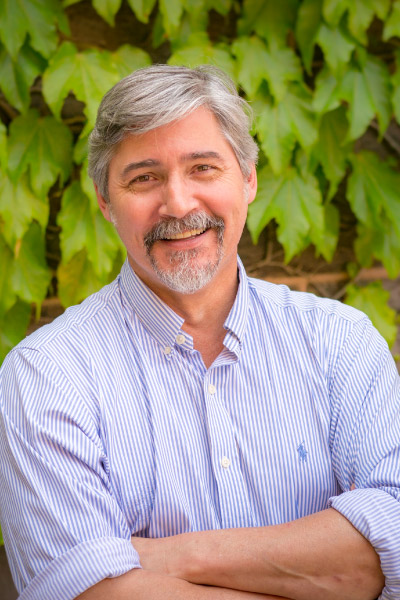
Dean
Nelson Institute for Environmental Studies
Paul Robbins, a native of Denver Colorado and UW–Madison alumnus, holds a bachelor’s degree in anthropology, along with a master’s degree and doctorate in geography, both from Clark University. As dean of the Nelson Institute for Environmental Studies, he guides the institute’s mission of serving as a world leader in addressing rapid global environmental change. His research addresses questions spanning conservation conflicts, urban ecology, and environment and health interactions. He has done extensive fieldwork in rural India, where he has focused his work on the politics surrounding forestry and wildlife conservation in Rajasthan, India, as well as recent research examining the wealth of biodiversity (frogs, birds, and mammals) in commercial coffee and rubber plantations throughout south India. Robbins has also led national studies of consumer chemical risk behaviors in America, including research on the abiding passion of Americans for their lawns and mosquito management policies in the Southwest. In addition, he has studied the complexities of elk management policy on the settled fringes of Yellowstone Park.
His writings include the bestselling textbook Political Ecology: A Critical Introduction (Third Edition) and the book Lawn People: How grasses, weeds and chemicals make us who we are. He teaches a range of topics from environmental studies and natural resource policy and politics.
Talks:
No Going Back: Daunting environmental challenges and surprising opportunities
Surveys the critical status of current environmental change, while pointing to interesting opportunities and reasons for cautious optimism.
Approximate Length of Talk: 20 – 45 minutes
Producing Wildlife: The future of conservation in India and elsewhere
This talk shows how wildlife often thrives in India in densely populated and fully humanized environments, with implications for the future of conservation around the world.
Approximate Length of Talk: 20 – 45 minutes
The Mosquito State: Managing insects and citizens in the era of West Nile Virus
This talk shows how threats to human health are changing owing to new mosquito habitats, even in the urban United states, while stressing the limits of our current system for governing mosquitoes and other disease vectors.
Approximate Length of Talk: 20 – 45 minutes
Lawn People: How grasses, weeds and chemicals make us who we are
Reviews a national study that shows many counter-intuitive results about who uses lawn chemicals and why.
Approximate Length of Talk: 20 – 45 minutes