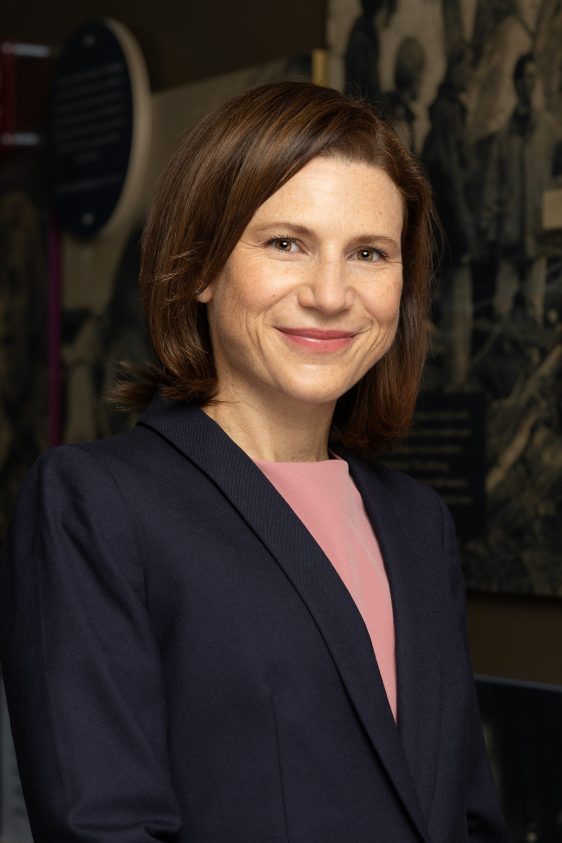
Assistant Professor
College of Letters & Science | Sandra Rosenbaum School of Social Work
Hometown: Centennial, CO
Dr. Jessica Pac’s research examines how social and labor policies shape child and family wellbeing, with a focus on preventing child abuse and neglect, reducing poverty, and promoting intergenerational opportunity. Her interdisciplinary work bridges economics, social policy, and public health to evaluate how policies affect infant and maternal health, child safety, economic stability, and long-run mobility. Using rigorous causal methods, her research produces actionable evidence for policymakers, practitioners, and philanthropic partners.
Dr. Pac has published 19 peer-reviewed articles and has received national recognition including the CSWE Child Welfare Early Career Award (2025), the Association of Population Centers Fellowship (2025), and the Frank R. Breul Memorial Prize (2023). Her research is supported by the National Institute of Child Health and Human Development, the CDC, the Robert Wood Johnson Foundation, and others. She earned her PhD from Columbia University and an MPA from Cornell University.
Talks:
The Science of Inequality: How Stress, Stability, and Social Policies Shape Development
Decades of research show that pregnancy and early childhood are the most sensitive periods for development. This talk explores how early-life stress and instability shape lifelong health and economic outcomes, and how social policies that support families during these stages can play a powerful role in preventing inequality.
Measuring Dignity: Rethinking How We Evaluate Social Policy
Many policies raise incomes yet fail to improve mental health, safety, or long-term mobility. This talk introduces dignity-based measures that capture psychosocial, relational, and institutional harms affecting children and families, offering a practical framework for diagnosing why policies succeed or fail and how to design interventions that better support wellbeing.
The U.S. Child Welfare System: A Primer
What happens after a concern about a child is reported? This talk provides a clear, evidence-based overview of the U.S. child welfare system, from reports and investigations to services and foster care, clarifying common misconceptions and highlighting how poverty, stress, and policy design shape family-system contact.
Heat, Stress, and Child Safety: How Environment and Inequality Interact
Extreme heat increases family stress and risks to child safety, especially in low-resource communities. This talk examines evidence on how climate stressors interact with poverty and housing conditions and discusses policy responses—from energy assistance to housing design—that can reduce harm and protect children as temperatures rise.
Pregnancy at Work: What Actually Helps Parents Stay Employed and Healthy
Pregnancy often coincides with job loss, income instability, and health risk. This talk examines evidence on workplace accommodations and family policies, showing how small, low-cost supports can improve employment continuity, maternal health, and child wellbeing—and why policy design matters as much as policy intent.
Teaching Neurodiverse Students: Evidence-Based Instruction That Supports Wellbeing
Neurodiverse students thrive when instruction reduces unnecessary stress and increases clarity, flexibility, and trust. This talk explains what neurodiversity is, the conditions that support learning, and practical instructional strategies educators can implement—highlighting how thoughtful instructional design can improve wellbeing and learning outcomes for all students.
AI in Education: Supporting Learning Without Undermining Child Wellbeing
As AI enters classrooms, design choices matter for children’s learning and development. This talk explains how AI works, examines risks and benefits, and offers practical guidance for ethical use—showing how instruction and policy can save time and improve learning without compromising wellbeing, critical thinking, or creativity.