Badger Talks Quick Picks
A Map for a Healthy Wisconsin
To be released on April 14
This is an accordion element with a series of buttons that open and close related content panels.
Talk description
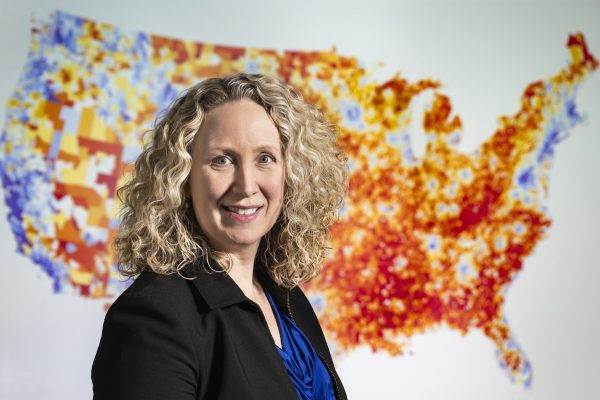
A powerful tool from the UW-Madison is transforming how health care is delivered across the nation. The Area Deprivation Index is a free, online tool that connects millions of data points related to employment, education, income, and housing quality to U.S. Census data to provide a user-friendly map of American neighborhoods ranked by their relative advantage — or disadvantage. Put another way, the ADI measures the way the places we live and work influence our health over the course of a lifetime.
About the speaker
Amy Kind, MD, PhD, is leader in the fields of social determinants of health and Alzheimer’s Disease, leading a $40 million NIH research portfolio and the team that developed the Neighborhood Atlas. She is CEO of the Orion Initiative and associate dean of Social Health Sciences and Programs at the University of Wisconsin School of Medicine and Public Health.
Breakthroughs in Personalized Breast Cancer Treatment

This is an accordion element with a series of buttons that open and close related content panels.
Talk description
Liquid biopsies use DNA isolated from the blood to identify cancer-specific DNA changes in patients with cancer. The Sharifi Lab recently co-developed a liquid biopsy approach that allows them to measure cancer gene expression in addition to cancer DNA changes, giving them unique insights into how cancer cells are evolving in patients as they receive treatment. Here, Marina Sharifi will describe the lab’s ongoing research supported by the Wisconsin Partnership Program to apply this approach to personalize treatment for patients living with estrogen positive metastatic breast cancer.
About the speaker
Marina Sharifi joined the University of Wisconsin, Madison faculty as an Assistant Professor in the Department of Medicine, Division of Hematology, Oncology and Palliative Care in August 2022. She is a physician scientist with a lab focused on leveraging multiomic approaches to identify molecular drivers of targeted therapy response and resistance in patients with breast and prostate cancer. Her clinical practice is in breast cancer medical oncology.
Badger Talks Podcast
Promoting Health and Nutrition through Indigenous Food Practices
To be released on April 28
This is an accordion element with a series of buttons that open and close related content panels.
Podcast description
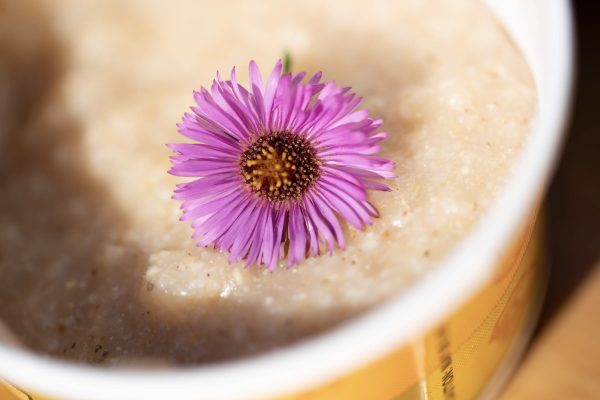
Today, we talk with members of two community health initiatives - From Seeds to Table, led by Ukwakhwa, Inc. and the Oneida Food Sovereignty Initiative, a community-academic partnership led by the Oneida Nation in partnership with the UW School of Medicine and Public Health. Both initiatives are working to improve health in Wisconsin and within their tribal community by advancing traditional health-promoting food practices.
These projects are proudly supported by the Wisconsin Partnership Program (WPP) at the University of Wisconsin School of Medicine and Public Health. WPP’s mission is to improve health for all in Wisconsin through research, education and community partnerships
About the speakers
Stephen Webster is the Farm and Culinary Operations Director of Ukwakhwa, the teaching farm he and his wife began building in 2017 to revitalize Haudenosaunee agriculture, seed keeping, and Indigenous foodways. He leads Ukwakhwa’s Seed to Table program, an Indigenous culinary partnership funded by the Wisconsin Partnership Program that provides hot meals to the community twice a month and offers monthly meal-prep classes to the public. Through his work, Stephen blends traditional knowledge with modern food education to strengthen food sovereignty and cultural connection across the Oneida Nation.
Bret Benally Thompson serves as NACHP’s Director of Indigenous Health and Cultural Guidance, and is the Principal Investigator for the Indian Health Service Indians Into Medicine (INMED), Wisconsin Partnership Program IIMAGIN and Oneida Food Sovereignty grants. Benally Thompson is a member of the White Earth Nation, is a palliative care physician at UW Health and Meriter, and has been involved with NACHP since before its inception.
As an alumnus of University of Minnesota-Duluth, he was part of their program to support Native American students during medical school. He completed both his family medicine residency and a fellowship in palliative care and hospice medicine in Alaska.
Vanessa Miller has worked for the Oneida Nation Environmental, Land, And Agriculture Division for 14 years, with 11 years experience in Environmental and Public Health as a Registered Sanitarian in the State of Wisconsin. Acting in a regulatory role for the Nation under Oneida’s own Food Service Law, Vanessa has experience in tribal food code and policy development and advocating for self-regulation. Vanessa’s current work in the Food and Agriculture Area focuses on implementation of a long-term food sovereignty strategic plan, recognizing the significance food plays in the overall health of indigenous communities. As a part of measuring success, the Nation is focusing on community wealth building and the benefits that come from improved community health as connection back to our food pathways is rebuilt.