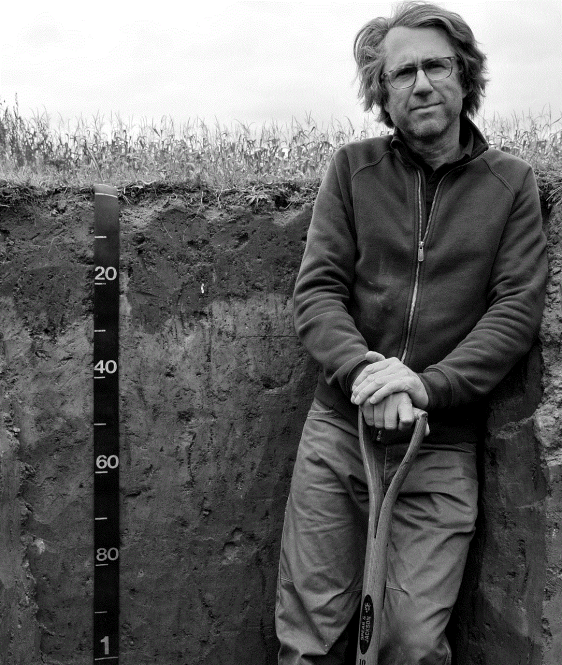
Professor of Soil Science
College of Agricultural & Life Sciences | Department of Soil & Environmental Sciences
Hometown: Netherlands
Alfred E. Hartemink is Professor of Soil Science at the University of Wisconsin–Madison and an internationally recognized pedologist whose work spans soil classification, soil geography, and global soil change. His research integrates field observations, laboratory analyses, and historical perspectives to advance understanding of soils across agricultural, urban, and natural landscapes. He has published extensively on pedology and has held leadership roles in international soil science organizations, including the International Union of Soil Sciences. Hartemink is also widely known for his scholarship on the history of soil science and for mentoring students and collaborators worldwide.
Talks:
Soils and the grand environmental challenges
Soils are central to many of today’s grand environmental challenges. They regulate water quality and storage, sustain food production, store large amounts of carbon, support biodiversity, and recycle nutrients. Understanding and managing soils is essential for climate change mitigation, ecosystem resilience, sustainable agriculture, and maintaining healthy landscapes and communities.
The history of soil science in Wisconsin
Wisconsin has a long and influential history in soil science, beginning with early agricultural surveys and the establishment of soil studies at the University of Wisconsin–Madison in the late nineteenth century. The state contributed to advances in soil survey, fertility, and conservation, while its diverse glacial landscapes provided an important field laboratory for pedology and land-use research.
The soils of Wisconsin
Wisconsin’s soils are diverse, reflecting glacial history, climate, vegetation, and topography. They range from sandy soils in the Central Sands and forested north to fertile Mollisols and Alfisols in southern agricultural regions. Wetlands and organic soils are widespread, and this diversity supports farming, forestry, water regulation, and ecosystem resilience.