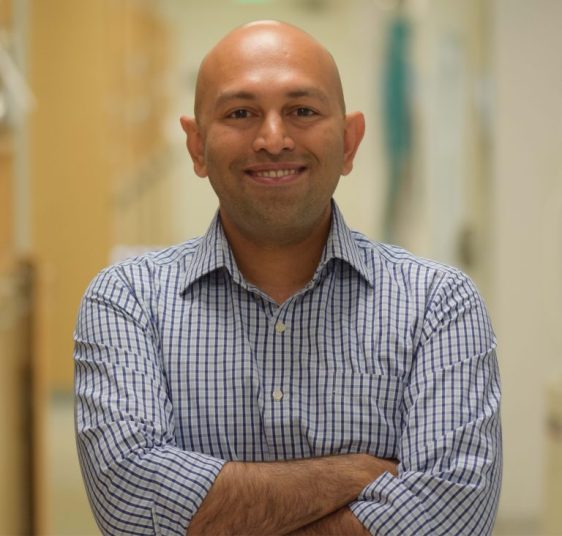
Associate Professor
College of Agriculture and Life Sciences | Department of Bacteriology
Hometown: Mumbai, India
Dr. Karthik Anantharaman is an Associate Professor and Vilas Faculty Fellow in the Department of Bacteriology at the University of Wisconsin-Madison, where his laboratory studies microbial and viral ecology with applications for human and environmental health, such as in antimicrobial resistance and phage therapy. His interdisciplinary research program uses a combination of computational, laboratory and field-based experiments to develop and apply novel approaches to study viral diversity, ecology, and evolution in environments ranging from soil, lakes, oceans, and the human gut.
Talks:
AI-Based Frameworks for Harnessing Viruses in Health and Sustainability
Phages, the viruses that infect and kill microbes, are the most abundant life forms on Earth, playing essential roles in human health and ecosystems. They hold immense potential in biotechnology, especially in addressing the global challenge of antimicrobial resistance. However, phages remain vastly understudied due to the lack of standardized tools for their experimental and computational analysis.
In this presentation, I will showcase innovative frameworks from our lab that use machine learning and deep learning to transform how we study phages. This work paves the way for groundbreaking applications, including virus engineering, microbiome modulation, and phage therapy, unlocking the vast potential of phages in science and medicine.
The ecology and evolution of viruses in nature
Viruses including phage play a crucial role in human health, global ecosystem processes, and biogeochemistry. While uncultivated viral genomes are revolutionizing our understanding of viral diversity, ecology, and evolution, freshwater viruses remain significantly underexplored. As anthropogenic change begins to impact ecosystems globally, long-term ecological studies are emerging as powerful tools to investigate microbiome dynamics, evolution, and ecosystem change. However, such studies are rare in environmental microbiomes, and even less frequent on viral communities. In this talk, I will describe recent studies from our lab describing the role of viruses in diverse soil, freshwater, and marine ecosystems.